


What Are Swim Trunks Made Of? Fabrics and Materials Guide
If you've ever picked up a pair of swim trunks and wondered what exactly you're holding, you're not alone. Swim trunk fabrics have come a long way from the scratchy nylon shorts of the 80s, and the material your trunks are made of affects everything: how they feel, how fast they dry, how long they last, and how well they hold up in saltwater and sun.
Here's a complete breakdown of what swim trunks are actually made of, and what to look for when you're buying.
THE MOST COMMON SWIM TRUNK FABRICS
Polyester
Polyester is by far the most common material used in swim trunks, and for good reason. It's durable, lightweight, quick-drying, and holds color well even after repeated exposure to chlorine, saltwater, and UV rays.
Modern polyester swim fabrics are nothing like old-school polyester. They're soft, stretchy, and engineered specifically for water use.
What makes polyester great for swim trunks:
- Dries extremely fast
- Resistant to fading, chlorine, and saltwater
- Holds its shape wash after wash
- Lightweight and comfortable
The downside of cheap polyester is that it can feel stiff or plastic-like. Higher quality polyester, especially recycled polyester, tends to be noticeably softer and more comfortable against the skin.
Recycled Polyester (rPET)
Recycled polyester is made from post-consumer plastic waste, most commonly recycled plastic bottles. It performs exactly like virgin polyester but with a significantly lower environmental footprint.
At Bermies, all our swim trunks are made from 100% recycled polyester fabric. Each pair uses roughly 7 to 10 recycled plastic bottles. The performance is identical to traditional polyester, the feel is actually softer, and it's a better choice for the oceans you're swimming in.
Nylon
Nylon is another popular swim trunk material. It's extremely soft, has a slight sheen, and is known for its silky feel against the skin. It's also very durable and abrasion-resistant.
Nylon vs polyester for swim trunks:
- Nylon tends to feel softer and more luxurious
- Polyester dries faster and holds color better over time
- Both are excellent choices for swimwear
Many premium swim trunk brands use nylon blends to get the softness of nylon with added durability.
Spandex / Elastane / Lycra
You'll almost never find a pair of swim trunks made of pure spandex, but you'll almost always find spandex blended into the fabric, usually between 5% and 20%. Spandex (also sold under the brand names Elastane and Lycra) is what gives swim trunks their stretch.
What spandex adds to swim trunks:
- 4-way stretch so the trunks move with your body
- Shape retention so they don't sag or bag out when wet
- A better fit across different body types
Look for trunks with at least some spandex content if you want freedom of movement in the water.
THE LINER: A DIFFERENT MATERIAL ENTIRELY
Most swim trunks have a built-in liner, and the liner is usually made from a different fabric than the outer shell.
Mesh liner: Typically a loose polyester netting. Lightweight, breathable, but prone to bunching and can cause chafing during active use.
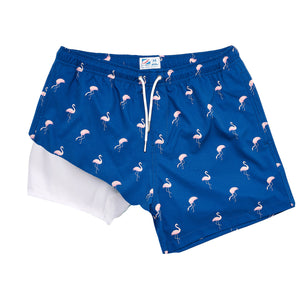
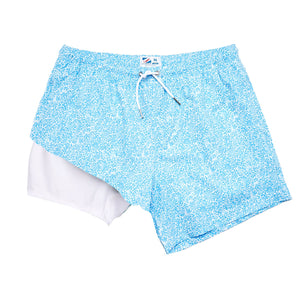
Compression liner: A fitted, stretchy inner short made from a blend of polyester and spandex (similar to athletic compression shorts). Stays in place, eliminates chafing, and provides full support without underwear.
At Bermies our compression liner is made from 4-way stretch fabric that moves with you and feels like a second skin. If you've ever had issues with mesh liners bunching or causing irritation, a compression liner is a game changer.
WHAT ABOUT THE WAISTBAND?
The waistband of most swim trunks is made from the same outer fabric with an elastic inner band. Better quality swim trunks use a soft, wide elastic that doesn't dig in or roll, and most include an interior drawstring for a customizable fit.
Some swim trunks also have a silicone grip strip on the inside of the waistband to keep them from slipping down. If you're active in the water, this small detail makes a noticeable difference.

FEATURES TO LOOK FOR IN SWIM TRUNK FABRIC
Quick-dry technology
Standard polyester dries fast on its own. Some swim trunks add a nano-coating or micro-perforation treatment that speeds up drying even further. At Bermies we use a quick-dry nano-coating on all our trunks so you can go from the water to a restaurant without feeling like you're still soaking wet.
UPF sun protection
The weave density and fabric treatment of swim trunks affects how much UV radiation passes through the fabric. Look for trunks rated UPF 50+, which blocks 98% of UV rays. All Bermies swim trunks are rated UPF 50+.
Chlorine and saltwater resistance
Cheap fabrics degrade quickly in chlorinated pools or saltwater. High-quality polyester and recycled polyester hold up much better over time. If you swim regularly in a pool, this matters a lot for how long your trunks last.
4-way stretch
A fabric that stretches in all four directions (horizontally, vertically, and diagonally) gives you full freedom of movement whether you're swimming, surfing, or just walking on the beach. Look for at least some spandex content in the fabric blend.

FABRICS TO AVOID
100% cotton: Cotton absorbs water and takes forever to dry. It gets heavy when wet, loses its shape, and degrades quickly from sun and chlorine exposure. Fine for a towel, not ideal for swim trunks.
Low-quality nylon blends: Some cheaper swim trunks use thin nylon that becomes translucent when wet. Not a great look. Always check the fabric weight and read reviews before buying.
BERMIES SWIM TRUNK FABRICS
All Bermies swim trunks are made from:
- Outer shell: 100% recycled polyester with quick-dry nano-coating and UPF 50+ sun protection
- Compression liner: 4-way stretch polyester/spandex blend, soft and supportive
- Waistband: Wide soft elastic with interior drawstring and silicone grip strip
The result is a trunk that dries fast, lasts long, feels great, and is better for the environment. Explore the full collection at

THE BOTTOM LINE
The best swim trunks are made from high-quality polyester or recycled polyester, with a spandex blend for stretch, a well-engineered liner, and treatments for quick drying and UV protection.
If you're shopping for new trunks, skip the cotton, look for at least some spandex in the blend, and pay attention to the liner. Those three things will make a bigger difference in how your trunks feel and perform than the print you choose.
